Treating just the stomach for heartburn is like fixing a lightbulb when the fuse box is blown. In 2026, we’ve realized that heartburn isn’t just a stomach problem; it’s a communication breakdown. The Vagus nerve is the highway that tells your stomach when to close the hatch. If you only treat the ‘isolated’ stomach, you’re missing the ‘integrated’ system that controls it all. Here is how to wake up your internal regulator.
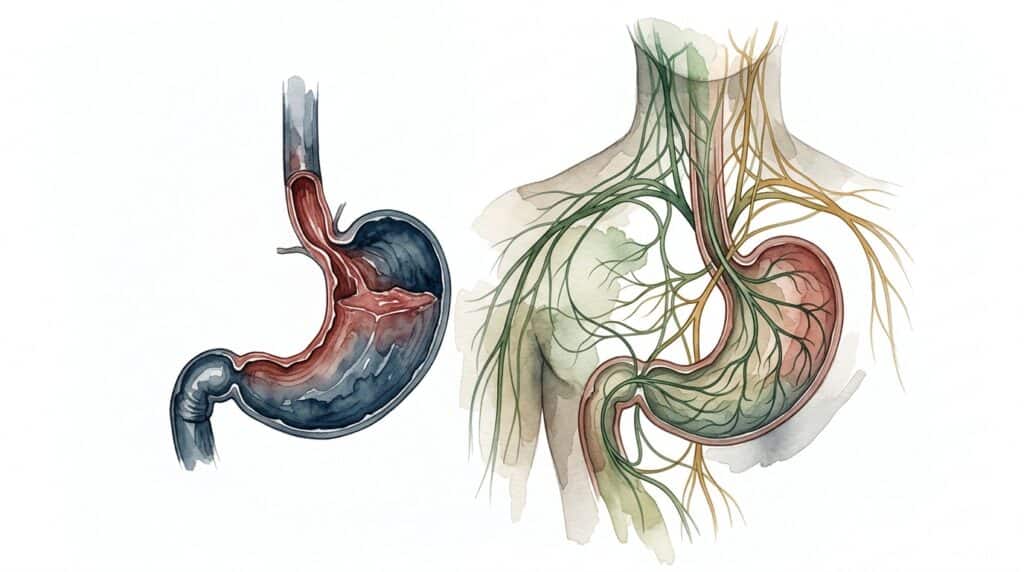
For decades, we approached acid reflux with a heavy hand and a narrow focus. We poured antacids down our throats and swallowed pills designed to shut off our natural acid production. This was the era of the isolated organ approach, where we treated the stomach as a rogue actor that simply needed to be suppressed. We looked at the symptoms, felt the fire, and tried to douse it with chemicals without ever asking why the fire started in the first place.
Now, we understand that the body operates as a finely tuned machine where every part whispers to the next. Your digestive tract isn’t a silo; it’s a complex network governed by the longest nerve in your body. This nerve acts as the foreman of your internal construction crew, directing traffic, managing secretions, and ensuring that the gates are locked when they should be. When that foreman falls asleep on the job, the system falls into chaos.
Learning to stimulate this nerve is not about finding a quick fix or a magic pill. It is about reclaiming the grit and discipline required to master your own biology. It is about understanding the mechanics of your “hatch” and the electrical signals that keep it sealed. If you are tired of masking symptoms and want to address the root of the breakdown, you have to look at the wiring.
Vagus Nerve Stimulation For Acid Reflux 2026
Vagus nerve stimulation for acid reflux represents a shift from chemical intervention to neurological regulation. The Vagus nerve, also known as the tenth cranial nerve, is the primary component of the parasympathetic nervous system. It wanders from the brainstem all the way down to the abdomen, touching every major organ along the way, including the esophagus and the stomach. Its job is to facilitate the “rest and digest” state, which is the direct opposite of the “fight or flight” response.
In our modern world, most of us spend our days in a state of low-grade, chronic stress. This keeps our sympathetic nervous system—the gas pedal—floored at all times. When this happens, the Vagus nerve loses its “tone,” much like an unused muscle becomes weak and flaccid. When the Vagus nerve is weak, the signals it sends to the digestive system become garbled. The most critical of these signals is the one that tells the Lower Esophageal Sphincter (LES) to stay tightly closed after food enters the stomach.
The LES is the “hatch” we mentioned earlier. It is a ring of muscle that acts as a one-way valve. When you have high vagal tone, that valve is snappy, responsive, and strong. When vagal tone is low, the valve becomes sluggish and stays partially open, allowing stomach acid to creep back up into the sensitive lining of the esophagus. Vagus nerve stimulation in 2026 is the practice of “toning” this nerve to restore the integrity of that valve.
Think of it like a seasoned rancher checking the fences. If the fence is down, the cattle wander off. You could spend all day chasing individual cows back into the pen—that is what antacids do. Or, you could simply fix the fence. Stimulating the Vagus nerve is the act of repairing the fence so the system can govern itself once again.
How the “Hatch” Responds to Neural Signals
The Lower Esophageal Sphincter does not operate on a timer; it operates on pressure and electrical cues. When food travels down your throat, the Vagus nerve coordinates a wave of muscular contractions called peristalsis. As the food reaches the end of the esophagus, the nerve tells the LES to relax and let the food pass. Once the food is in the stomach, the nerve should immediately signal the LES to clamp shut.
This clamping action is also dependent on the presence of sufficient stomach acid. Contrary to popular belief, many people suffer from reflux not because they have too much acid, but because they have too little. When acid levels are high, the Vagus nerve detects the acidity and signals the LES to close even tighter to protect the esophagus. When you take acid blockers, you lower that acidity, the nerve doesn’t get the signal, and the hatch stays loose.
To fix this, we must use techniques that increase the electrical output of the Vagus nerve. This is achieved through mechanical, thermal, and auditory methods. By intentionally triggering the nerve’s response, we can “prime” the digestive system to handle food properly. This isn’t just about digestion; it’s about shifting the entire body from a state of emergency to a state of maintenance.
The Diaphragmatic Connection
The Vagus nerve passes directly through the diaphragm, the large muscle responsible for breathing. When you breathe shallowly into your chest—a hallmark of stress—the diaphragm barely moves, and the Vagus nerve receives no mechanical stimulation. However, when you take deep, belly breaths, the diaphragm massages the Vagus nerve with every inhalation and exhalation.
This physical interaction is the most immediate way to influence vagal tone. By controlling the breath, you are manually overriding the stress response and forcing the Vagus nerve to fire. This sends a “clear” signal down to the stomach and the LES, reminding the hatch to do its job. It is a simple mechanical process that requires no equipment, only the discipline to stop and breathe correctly.
Practical Techniques for Vagal Stimulation
If you want to strengthen your internal regulator, you need a daily protocol. Just as a pioneer wouldn’t expect to build a cabin in an afternoon, you shouldn’t expect your Vagus nerve to regain its strength overnight. It requires consistent effort and a willingness to engage in practices that might feel a bit unusual at first. Here are the most effective methods used in 2026.
Diaphragmatic Breathing (The Piston Method)
This is the foundation of all vagal work. Sit or lie down in a quiet place. Place one hand on your chest and the other on your belly. Inhale slowly through your nose for a count of four, ensuring that only the hand on your belly moves. Hold for two seconds, then exhale through pursed lips—like you are blowing through a straw—for a count of eight.
- The long exhalation is the key; it triggers the parasympathetic response.
- Repeat this for five to ten minutes before every meal.
- This primes the LES to close tightly once you begin eating.
Cold Exposure (The Thermal Reset)
Sudden cold exposure is a powerful way to “shock” the Vagus nerve into action. When your skin hits cold water, your heart rate initially spikes, but then the Vagus nerve kicks in to slow it down. This reflex strengthens the nerve over time. You don’t need a full ice bath to see results; simply splashing ice-cold water on your face for thirty seconds can be enough to trigger the effect.
For a more advanced approach, end your daily shower with two minutes of pure cold water. Focus on letting the water hit the back of your neck and your chest. Practice your diaphragmatic breathing while the cold hits you to maintain control. This builds “vagal resilience,” making your digestive system less likely to fail under stress.
Auditory Vibration (Gargling and Humming)
The Vagus nerve is connected to the vocal cords and the muscles in the back of the throat. High-intensity gargling or loud, resonant humming creates physical vibrations that stimulate the nerve branches in the pharynx. This is a direct, localized way to send signals down the nerve path.
- Gargle with a glass of water until your eyes tear up; this ensures you are engaging the muscles deeply enough.
- Practice “Vom-ing”—making a deep “Voooom” sound that vibrates in your chest—for several minutes a day.
- Singing loudly, especially with others, has been shown to improve vagal tone through the same vibratory mechanisms.
The Benefits of an Integrated Nerve Approach
When you stop focusing on the isolated stomach and start focusing on the integrated nerve, the benefits extend far beyond just relieving heartburn. You are essentially upgrading the operating system of your entire body. Users who commit to vagal stimulation often report improvements that they never expected, simply because the Vagus nerve touches so many different systems.
The first and most obvious benefit is the reduction or elimination of acid reflux symptoms. As the LES regains its strength and the stomach produces the appropriate amount of acid, the “fire” in the chest subsides. This happens naturally, without the side effects associated with long-term pharmaceutical use, such as nutrient malabsorption or increased risk of bone fractures.
Secondly, improved vagal tone leads to better systemic inflammation management. The Vagus nerve is a key player in the “cholinergic anti-inflammatory pathway.” By stimulating the nerve, you tell the body to dampen the production of pro-inflammatory cytokines. This can lead to less joint pain, clearer skin, and better recovery from exercise. It is a holistic approach to health that starts in the gut but ends in the whole self.
Finally, there is the mental clarity and emotional stability that comes with a balanced nervous system. Because the gut and brain are in constant communication via the Vagus nerve (the gut-brain axis), a calm gut leads to a calm mind. Many people find that their “stress-induced” heartburn disappears because they are no longer reacting to life from a state of constant panic. You become the steady hand at the wheel.
Challenges and Common Mistakes
The biggest challenge in Vagus nerve stimulation is the “quick fix” mentality. We have been conditioned to expect results in thirty minutes or less, thanks to the pharmaceutical industry. Vagal work doesn’t work that way. It is a slow process of remodeling your nervous system. Many people try the breathing or the cold water for three days, don’t see a massive change, and give up. You must have the grit to stay the course for weeks and months.
Another common mistake is performing the techniques with poor form. Shallow “chest” breathing during a “vagal exercise” is counterproductive. It actually reinforces the stress response you are trying to break. You must be mindful of your mechanics. If you aren’t feeling the expansion in your lower ribs and belly, you aren’t stimulating the nerve effectively.
Finally, people often neglect the “Integrated” part of the equation. They might stimulate their Vagus nerve in the morning but then eat a diet of highly processed, inflammatory foods and drink excess alcohol at night. The Vagus nerve is a powerful regulator, but it cannot overcome a lifestyle that is constantly trying to sabotage it. You must meet the nerve halfway by providing it with the nutrients and environment it needs to thrive.
Limitations and Realistic Constraints
While Vagus nerve stimulation is a powerful tool, it is not a panacea for every digestive ailment. There are structural issues that no amount of humming or breathing can fully resolve. For instance, a hiatal hernia—where part of the stomach pushes up through the diaphragm—physically displaces the LES. In these cases, vagal work can help manage symptoms, but it may not “fix” the underlying anatomical displacement.
There are also environmental limitations. If you live in a state of extreme, unavoidable toxic stress—such as an abusive relationship or a dangerously high-pressure job—vagal stimulation is like trying to bail out a sinking ship with a thimble. You may find temporary relief, but the environment will continue to degrade your vagal tone faster than you can build it up. In these situations, lifestyle changes must accompany neural work.
Furthermore, some individuals may have actual physical damage to the Vagus nerve from surgery or severe viral infections. In these cases, the “wiring” itself is frayed. While neuroplasticity allows for some level of compensation, the progress may be significantly slower and may require medical-grade Vagus Nerve Stimulation (VNS) devices rather than just manual techniques. It is important to have realistic expectations based on your personal health history.
Comparison: Isolated Organ vs. Integrated Nerve
To truly understand the value of Vagus nerve stimulation, it helps to compare it to the traditional method of treating acid reflux. This table highlights the fundamental differences in approach, cost, and long-term impact.
| Feature | Isolated Organ (PPIs/Antacids) | Integrated Nerve (Vagal Tone) |
|---|---|---|
| Primary Goal | Suppress stomach acid production. | Restore LES function and neural signaling. |
| Complexity | Low (Swallow a pill). | Moderate (Requires daily practice). |
| Long-term Cost | High (Subscription-based health). | Low (It’s free to breathe and gargle). |
| Side Effects | Nutrient deficiency, gut dysbiosis. | Reduced stress, better sleep, mental clarity. |
| Sustainability | Low (Symptoms return if stopped). | High (Builds lasting physiological resilience). |
Practical Tips for Immediate Application
If you want to start waking up your internal regulator today, you don’t need a complex plan. Start small and build momentum. The goal is to weave these habits into the fabric of your daily life until they become second nature. Treat it like tending a garden—a little bit of work every day yields the best harvest.
- The “Three-Breath Rule”: Before you take your first bite of food, take three deep diaphragmatic breaths. This signals to your brain that it is safe to digest.
- The Cold Finish: Don’t try to take a 10-minute ice bath. Just turn the knob to cold for the last 30 seconds of your morning shower. It’s enough to wake up the nerve without being traumatic.
- Hum While You Work: If you find yourself getting stressed at your desk, start humming a low tone. It’s a discreet way to keep your Vagus nerve active during the day.
- Evening Gargle: Make gargling part of your toothbrushing routine. Gargle vigorously with your mouthwash or water until your throat feels a bit tired.
Keep a simple log of your reflux symptoms. You might notice that on days when you are consistent with your breathing and cold exposure, your chest feels lighter and your digestion feels more robust. This data will give you the motivation to keep going when the initial novelty wears off.
Advanced Considerations: Tracking Heart Rate Variability
For those who want to take their vagal health to the next level, tracking Heart Rate Variability (HRV) is the gold standard. HRV is the measure of the variation in time between each heartbeat. A high HRV indicates that your autonomic nervous system is flexible and that your Vagus nerve is doing its job well. A low, “robotic” HRV indicates that you are stuck in a stress state.
In 2026, wearable technology has made tracking HRV easier than ever. By monitoring your HRV, you can see in real-time how your Vagus nerve is responding to your stimulation techniques. If you see your HRV dipping, it’s a sign that you need to double down on your breathing and recovery work. It provides an objective “map” of your internal state.
You can also explore Transcutaneous Auricular Vagus Nerve Stimulation (tVNS). This involves using a small TENS-like device with ear clips that deliver a mild electrical current to the branch of the Vagus nerve that surfaces in the outer ear. While more clinical, this can be an effective way to “jumpstart” the system for those with severely depressed vagal tone. However, it should always be used as a supplement to, not a replacement for, the manual techniques mentioned above.
Example Scenario: The Executive with “Fire-Breath”
Consider the case of a 45-year-old executive named Thomas. Thomas has dealt with chronic acid reflux for a decade. He eats on the go, works 60 hours a week, and drinks four cups of coffee daily. He has been on high-dose PPIs for years, yet he still wakes up with a burning throat every morning. Thomas is the classic example of an “Isolated Organ” failure.
Thomas decides to switch to the “Integrated Nerve” approach. He starts by implementing the “Three-Breath Rule” before every meal, even if he’s eating in his car. He begins gargling every morning and night. After two weeks, he notices that his bloating has decreased. After a month, he feels “calmer” in his chest after eating. He isn’t cured yet, but he has stopped the downward spiral.
By the third month, Thomas has integrated a 2-minute cold blast at the end of his showers. His HRV, which he tracks on his watch, has climbed by 15 points. He finds that he only needs his antacids once or twice a week instead of every day. He is no longer just treating a “stomach problem”; he is managing a “nervous system reality.” He has fixed the fuse box, and the lightbulbs are finally staying on.
Final Thoughts
The transition from treating the isolated stomach to stimulating the integrated Vagus nerve is more than just a medical shift; it is a return to a more disciplined, self-reliant way of living. It requires us to acknowledge that we are not just a collection of parts, but a unified system governed by electrical and chemical signals. Heartburn is not your enemy; it is a signal that your foreman is asleep.
By using the techniques of diaphragmatic breathing, cold exposure, and auditory vibration, you can rebuild your vagal tone from the ground up. This isn’t a path of least resistance. It takes grit to stand under cold water or to stop and breathe when your inbox is overflowing. But the reward is a body that functions as it was intended to—balanced, resilient, and free from the fire.
Experiment with these methods. See what works for your unique biology. As you strengthen your Vagus nerve, you may find that other areas of your life—your sleep, your mood, and your energy—begin to align. The journey toward health is often a journey inward, toward the nerves that connect us to our very essence. Start today, and let your internal regulator lead the way.