The invasive shrub your gardener wants to rip out is the only source of the rare fatty acid that regenerates your stomach lining on contact. Gardeners call it a weed, but researchers in 2026 are calling it the ‘internal liquid bandage.’ Sea Buckthorn oil doesn’t just neutralize acid; its unique Omega-7 profile actually rebuilds the mucosal barrier that modern diets have stripped away.
If you have ever felt that persistent, gnawing heat in your chest or the sour taste of regret after a meal, you know the desperation of seeking relief. Most people reach for a chalky tablet or a pill that shuts off acid production, but these are often temporary fixes that ignore the underlying structural damage. We are going to look at a hardier solution, one forged in the harsh climates of the Himalayas and the salted coasts of the North Sea.
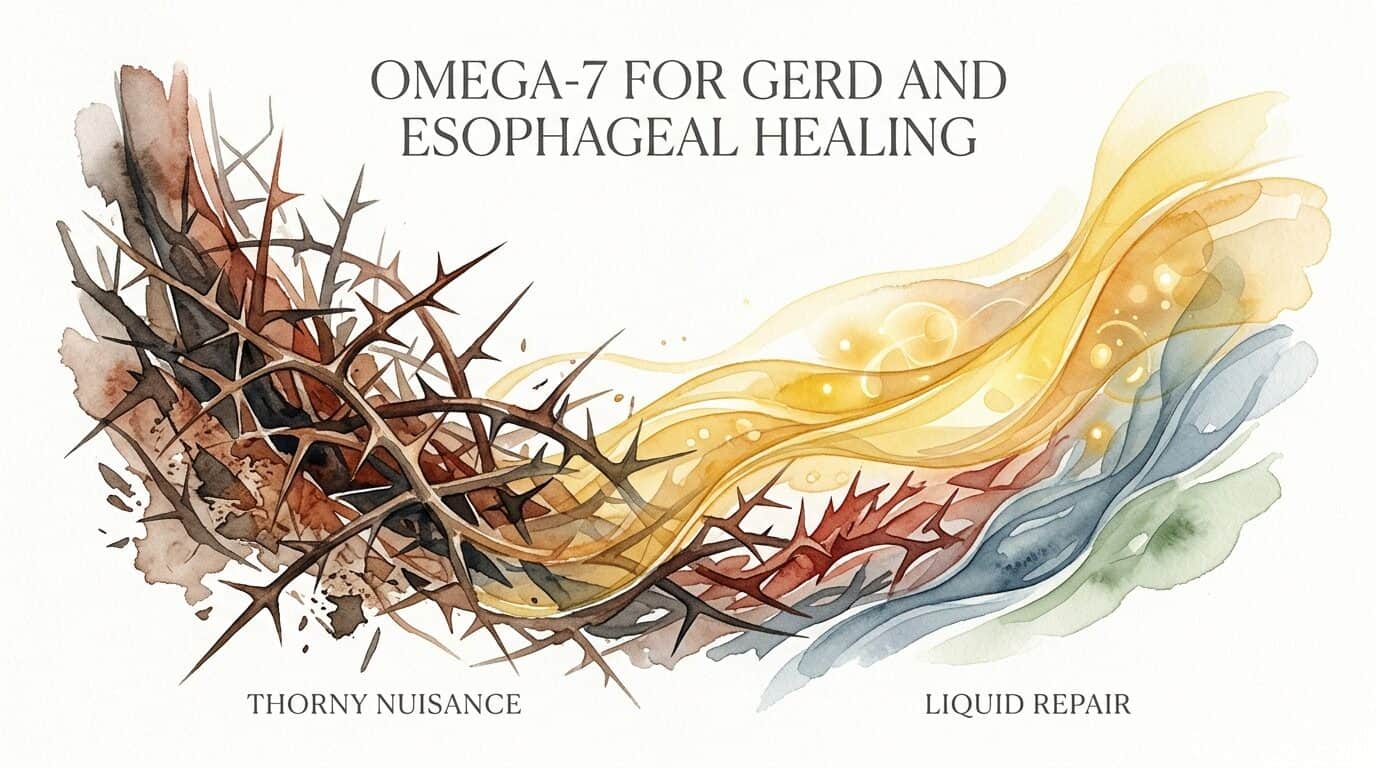
This plant, often dismissed as a thorny nuisance, carries a resilience that it passes directly to your digestive tract. When we talk about healing the gut, we are talking about restoring a physical wall that has been thinned out by stress, processed oils, and environmental toxins. Sea Buckthorn oil serves as the raw material for that restoration.
Understanding how to use this ancient botanical requires a shift in perspective. You are not just suppressing a symptom; you are providing the biological building blocks for cellular repair. Let’s explore how this rugged shrub provides the liquid repair your internal systems have been craving.
Omega-7 For Gerd And Esophageal Healing
Omega-7, specifically palmitoleic acid, is a rare monounsaturated fatty acid that acts as a fundamental component of healthy mucosal membranes. While most people are familiar with the heart-healthy Omega-3s found in fish oil, Omega-7 remains the “quiet workhorse” of the fatty acid world. In the context of Gastroesophageal Reflux Disease (GERD), it functions as a biological sealant.
When stomach acid or bile escapes into the esophagus, it causes micro-tears and inflammation in the delicate lining. Over time, this constant chemical irritation thins the mucosal layer, making it even more sensitive to future reflux events. Omega-7 works by signaling the body to increase the production of protective mucus and by accelerating the turnover of epithelial cells.
Think of the esophagus as a high-traffic hallway where the wallpaper has been shredded and the drywall is exposed. Standard antacids simply try to cool down the air in the room. Omega-7, however, provides the paste and the new paper to actually resurface the walls. This creates a physical barrier that prevents acid from reaching the sensitive nerve endings beneath the surface.
This fatty acid is not just a lubricant; it is a bioactive signaling molecule. It communicates with the cells responsible for tissue repair, urging them to close gaps in the mucosal lining. This is why many practitioners refer to it as a “liquid bandage.” It coats the irritated tissue and stays in place long enough to facilitate the body’s natural healing processes.
The Biological Mechanics of Sea Buckthorn Oil
To understand why Sea Buckthorn is so effective, we have to look at the environment where it thrives. This plant survives in high-altitude, arid, and freezing conditions that would kill lesser vegetation. To survive, it produces an oil that is incredibly dense in fat-soluble vitamins, antioxidants, and that elusive Omega-7.
When you consume high-quality Sea Buckthorn berry oil, it begins to work the moment it touches your throat. Most fats require extensive digestion in the small intestine, but the unique structure of these fatty acids allows them to provide topical relief to the esophagus on the way down. This immediate contact helps to soothe the “fire” associated with acute reflux.
Once inside the stomach, the oil doesn’t just sit there. It mingles with the gastric juices and coats the stomach wall, providing a layer of protection against the very acid the stomach produces. This is particularly vital for individuals dealing with gastritis or peptic ulcers, where the stomach’s own defenses have been compromised.
The repair mechanism goes deeper than the surface. Research indicates that palmitoleic acid helps regulate the inflammatory response at a cellular level. It inhibits certain pro-inflammatory pathways that otherwise keep the digestive tract in a state of constant irritation. By lowering the “background noise” of inflammation, the body can finally shift from a state of defense to a state of reconstruction.
Distinguishing Berry Oil from Seed Oil
One of the most common mistakes beginners make is failing to distinguish between the two types of Sea Buckthorn oil. The plant produces a small, orange berry that contains both a seed and a fleshy pulp. Each part yields a very different type of oil with different therapeutic profiles.
Sea Buckthorn Berry Oil (Pulp Oil) is where the Omega-7 lives. This oil is deep orange or red in color due to its high concentration of carotenoids. If your goal is to heal the esophagus, regenerate the stomach lining, or soothe the skin, this is the oil you need. It is thick, flavorful, and carries the regenerative power required for mucosal health.
Sea Buckthorn Seed Oil is lighter in color and much higher in Omega-3 (Alpha-linolenic acid) and Omega-6. While it is excellent for overall cardiovascular health and general inflammation, it lacks the high concentration of Omega-7 found in the pulp. Using seed oil to treat GERD is like trying to fix a leaking roof with a floor cleaner; it’s a good product, but it’s the wrong tool for this specific job.
When sourcing your oil, you must ensure you are getting a “total” oil or a specific “berry pulp” oil. A high-quality berry oil will have a pungent, fruity scent and a color so vibrant it can stain fabric. This intensity is a marker of the medicinal compounds held within the fat.
Practical Benefits for Chronic Digestive Distress
The benefits of integrating Sea Buckthorn into a digestive health regimen are measurable and often felt within the first two weeks of consistent use. Unlike pharmaceutical interventions that can lead to nutrient malabsorption, this oil actually supports the absorption of fat-soluble vitamins like A, D, E, and K.
- Rapid Soothing: The thick consistency provides immediate topical relief to the “burning” sensation in the chest and throat.
- Tissue Regeneration: Long-term use promotes the thickening of the esophageal wall, making it more resilient to occasional acid exposure.
- Reduced Sensitivity: By repairing the mucosal barrier, you may find that “trigger foods” become less volatile over time.
- Anti-microbial Support: Sea Buckthorn contains compounds that may help inhibit the overgrowth of harmful bacteria in the stomach, such as H. pylori.
Beyond the esophagus, this oil supports the entire “tube” of the body, from the mouth to the colon. It is frequently used for Sjögren’s syndrome (which causes extreme dry mouth) and for healing the lining of the intestines in cases of “leaky gut” or general irritable bowel symptoms. It is a systemic lubricant for the internal machinery.
Common Pitfalls and Implementation Mistakes
The most frequent error is inconsistent dosing. Natural fats work through accumulation and constant presence. Taking one capsule every other day when you remember it will not provide the “bandage” effect necessary for healing. To see results, the oil must be part of a daily ritual, ideally taken on an empty stomach or just before a meal that usually causes distress.
Another pitfall is purchasing low-grade, “refined” oils. The heat used in heavy refining processes destroys the delicate Omega-7 molecules and oxidizes the carotenoids. If the oil is clear or pale yellow, it has been stripped of its potency. You want oil that has been CO2 extracted, which is a cold process that preserves the integrity of the fatty acids.
Many people also fail to address their underlying diet while taking the oil. While Sea Buckthorn is a powerful healer, it is not a “magic shield” that allows you to consume unlimited amounts of processed sugars and inflammatory oils. It should be used as a foundation for repair while you simultaneously remove the irritants that caused the damage in the first place.
Finally, be aware of the “orange effect.” Because the berry oil is so high in beta-carotene, taking high doses can occasionally give the skin a slightly golden hue. This is harmless, but it can be surprising if you aren’t expecting it. It simply means your body is saturated with the protective antioxidants the plant provides.
Limitations and Realistic Expectations
Sea Buckthorn is an incredible tool, but it has its boundaries. It is a structural repair agent, not a mechanical fix. If your GERD is caused by a significant hiatal hernia—where a portion of your stomach has physically moved through your diaphragm—oil alone will not move that organ back into place. It can soothe the resulting irritation, but it won’t fix the anatomical shift.
Environmental factors also play a role. If you are a heavy smoker or live in a highly polluted area, the oxidative stress on your mucosal membranes is significantly higher. In these cases, you may require a higher dosage or a longer period of use before noticing a reduction in symptoms. Healing takes longer when the “insult” to the tissue is ongoing.
It is also important to note that Sea Buckthorn oil can have a mild blood-thinning effect. For most people, this is a cardiovascular benefit. However, if you are already on prescribed blood thinners or are scheduled for surgery, you should consult with a professional before starting a high-dose regimen. Nature’s medicines are powerful, and they must be respected as such.
Comparing Sea Buckthorn to Standard Treatments
When we look at Sea Buckthorn versus common over-the-counter options, the difference lies in the philosophy of care. Most standard treatments focus on the chemistry of the stomach (the acid), while Sea Buckthorn focuses on the biology of the container (the lining).
| Feature | Antacids / PPIs | Sea Buckthorn Oil |
|---|---|---|
| Primary Function | Neutralize or block acid. | Repair and protect the lining. |
| Nutrient Absorption | Can hinder B12 and Magnesium. | Enhances fat-soluble vitamins. |
| Speed of Action | Very fast (minutes). | Immediate soothing; days for repair. |
| Long-term Impact | Dependency and rebound acid. | Strengthens tissue resilience. |
While antacids are effective for a one-off “emergency” after a spicy meal, they do nothing to stop the cycle of damage. Sea Buckthorn is for the individual who is tired of the cycle and wants to rebuild their internal defenses so they are no longer dependent on quick fixes.
Practical Tips for Immediate Application
If you are ready to start using Sea Buckthorn, don’t just grab the first bottle you see on a big-box retailer’s shelf. Quality is everything when dealing with delicate fatty acids. Look for organic, CO2-extracted berry oil.
One of the best ways to use it for GERD is to take 1/2 to 1 teaspoon of the liquid oil directly, twice daily. Do not mix it into a large smoothie or hide it in food initially. You want the oil to coat your throat and esophagus. Let it sit on the tissue. Most people find the taste pleasantly tart and citrusy, though it is very concentrated.
For those who cannot handle the liquid, capsules are an option, but you lose the topical benefit for the esophagus. If using capsules, you might consider biting one and swallowing the oil to get that “liquid bandage” effect on the way down.
Timing is also crucial. Taking the oil 20 minutes before a meal creates a preemptive barrier. It prepares the stomach for the incoming food and ensures that any acid splashes are hitting a protected surface rather than raw tissue. Consistency over a 30-day period is the gold standard for evaluating its effectiveness for your specific body.
Advanced Considerations: The Synergy of Sea Buckthorn
For those who want to take their digestive healing further, consider what Sea Buckthorn works well with. It is naturally high in Vitamin E (tocopherols and tocotrienols), which protects the Omega-7 from going rancid. Adding a high-quality Zinc Carnosine supplement can create a powerful synergy. While Sea Buckthorn heals the mucosal layer, Zinc Carnosine helps knit the underlying tissue together.
Another advanced strategy involves rotating your Omega intake. While Omega-7 is the star for mucosal repair, your body still needs Omega-3 to manage systemic inflammation. A morning dose of Sea Buckthorn and an evening dose of high-quality fish oil or algae oil provides a comprehensive fatty-acid profile that addresses both the “walls” and the “foundation” of your health.
If you are dealing with Barrett’s Esophagus—a more serious condition where the tissue has begun to change due to chronic acid exposure—Sea Buckthorn is often used in conjunction with a strictly alkaline-leaning diet. In these cases, the oil is not just a supplement; it is a vital part of a tissue-preservation strategy.
The “Winter Shrub” Scenario: A Practical Example
Consider the case of a person we will call the “Modern Pioneer.” This individual spends their days working hard, often under stress, and finds that by 4:00 PM, their stomach is in knots and their throat feels like it’s been scoured with sandpaper. They’ve been taking PPIs for three years and find that if they miss even one dose, the pain is unbearable.
The Modern Pioneer starts a protocol of 1,000mg of Sea Buckthorn berry oil in the morning and another 1,000mg before dinner. In the first three days, they notice the “fire” isn’t as sharp. By week two, the sour taste in their mouth upon waking has diminished. Because the oil is providing a physical barrier, the body’s own healing mechanisms—which were previously overwhelmed—can finally start to patch the micro-tears in the esophagus.
By the end of the month, the Pioneer finds they can reduce their reliance on temporary acid blockers. They aren’t “cured” of all digestive issues, but the physical structure of their gut is now strong enough to handle a normal meal without a crisis. They have moved from a state of constant fragility to one of rugged resilience, much like the Sea Buckthorn shrub itself.
Final Thoughts
The transition from viewing a plant as a “thorny nuisance” to an “internal liquid bandage” is a journey toward self-reliance. In a world of temporary fixes and chemical suppressants, Sea Buckthorn offers a return to fundamental biology. It provides the exact fatty acids your body uses to build its most basic defenses—the mucosal membranes that separate your internal organs from the harsh environment of digestion.
Healing GERD and esophageal damage is not an overnight process. It requires the same persistence that the Sea Buckthorn plant shows when it digs its roots into salty, sandy soil. By providing your body with the Omega-7 it needs, you are giving it the tools to rebuild, layer by layer, until your digestive tract is once again a sturdy, well-protected system.
Take the time to source the right oil, commit to a consistent routine, and listen to your body as it responds to this ancient healer. There is a deep satisfaction in finding that the very “weed” the world wants to pull out is the very thing that can make you whole again. Experiment with this liquid repair, and let the resilience of the hardy Sea Buckthorn become your own.