Are you swallowing industrial-grade chalk when your body is actually begging for the minerals found in the deep arctic sea? In 2026, we’re moving past the era of synthetic chalk. While standard antacids just sit like lead in your stomach, Icelandic Red Algae actually bonds with your stomach lining to create a living mineral shield. It’s the difference between a chemical band-aid and biological restoration.
Most people treat their bodies like a chemistry set, throwing reactive compounds at symptoms and hoping for the best. You deserve a more grounded approach. Real health isn’t found in a laboratory beaker; it is found in the resilient life forms that survive the harshest environments on Earth. Icelandic Red Algae, or Lithothamnion calcareum, is one of those survivors.
We have spent decades being told that calcium is just calcium, but that is a half-truth at best. The white powder found in most over-the-counter supplements is often derived from ground-up limestone. Your body was not designed to digest rocks. It was designed to absorb life. When you choose marine-sourced minerals, you are choosing a form that has already been processed by a living organism, making it far more compatible with your own biology.
This guide will walk you through the shift from synthetic suppression to mineral-based healing. We will explore why the source of your minerals matters more than the dosage on the label. If you are tired of the cycle of reflux and relief, it is time to look toward the icy waters of the North Atlantic for a solution that works with your body, not against it.
Healing Acid Reflux With Red Algae Minerals
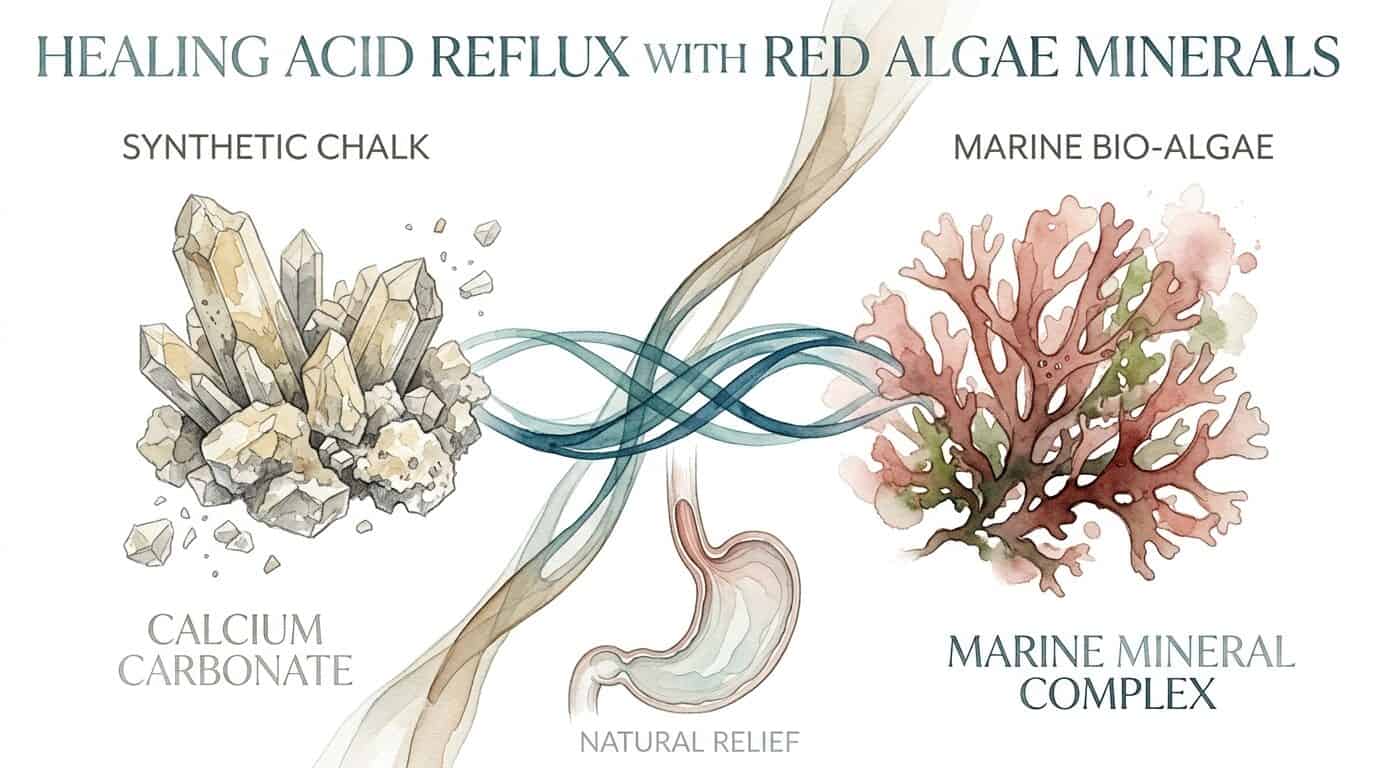
Acid reflux is more than just a burning sensation in your chest; it is a signal that your digestive environment has lost its equilibrium. Traditional antacids work by creating a sudden, violent chemical reaction that neutralizes stomach acid. While this provides immediate relief, it often leaves the stomach in a state of confusion. The body responds by overproducing acid to compensate for the sudden loss, leading to a “rebound” effect that keeps you dependent on the bottle.
Icelandic Red Algae offers a different path. Instead of a blunt chemical strike, it provides a sophisticated mineral matrix. This algae grows in the clean, cold waters off the coast of Iceland, where it absorbs more than 70 different trace minerals from the sea. As the algae reaches the end of its life cycle, it calcifies into a unique, porous structure. This isn’t a solid rock; it is a complex, honeycomb-like lattice.
When the mineral lattice enters your stomach, it doesn’t just dissolve. It acts as a buffer. The porous nature of the red algae allows it to absorb excess acid slowly and steadily. It creates a protective barrier, often referred to as a “living shield,” that coats the sensitive lining of the esophagus and stomach. This shield doesn’t just stop the burn; it provides the raw materials your body needs to repair the tissues that have been damaged by chronic acidity.
This approach is rooted in the concept of bio-availability. Because these minerals are organic in origin, they possess a crystalline structure that the human digestive tract recognizes. Magnesium, calcium, and bioactive silicon work in harmony here. They don’t just sit in the gut; they are taken up by the system to support bone density, nerve function, and cellular hydration. You are not just treating a symptom; you are nourishing the foundation of your health.
The Mechanics of the Living Mineral Shield
To understand why Icelandic Red Algae is superior to synthetic chalk, we have to look at the microscopic level. Standard calcium carbonate—the “chalk” in most antacids—is a dense, rhombohedral crystal. It has a low surface area relative to its weight. This means the acid can only attack the outside of the grain, leading to a jagged, uneven neutralization process that can be harsh on the gut.
Red algae is different because it is a “bio-active” mineral. The Lithothamnion species builds its cell walls by filtering sea water. This creates a massive surface area. In fact, a single gram of red algae has significantly more surface area for acid interaction than a gram of limestone. This allows for a smooth, sustained buffering action. It is the difference between throwing a bucket of water on a fire and using a precision misting system.
The “shield” effect comes from the way these minerals interact with the mucin in your stomach. Mucin is the natural slime that protects your stomach from its own acid. Marine minerals have been shown to strengthen this mucin layer. By reinforcing the body’s natural defenses, the red algae helps prevent the acid from ever reaching the sensitive tissues. This is a proactive measure rather than a reactive one.
The presence of magnesium is also vital. Most synthetic antacids are purely calcium-based, which can lead to constipation and mineral imbalances. Icelandic Red Algae contains a natural balance of magnesium, which helps keep the digestive tract moving smoothly. This synergistic relationship between calcium and magnesium ensures that the minerals are used by the body rather than just excreted as waste.
The Practical Benefits of Marine-Sourced Minerals
Choosing a marine-sourced mineral complex provides benefits that extend far beyond the digestive tract. While the immediate goal might be to stop the discomfort of reflux, the long-term impact on your overall vitality is significant. When you provide the body with a full spectrum of trace minerals, you are filling in the “nutritional gaps” created by modern, depleted soils.
One of the primary advantages is bone health. Synthetic calcium can sometimes settle in the wrong places, like the arteries or kidneys, because the body doesn’t know how to direct it. Marine minerals, however, come with “guide” minerals like strontium and boron. These trace elements act as a GPS, ensuring that the calcium actually reaches your bones and teeth. This makes red algae an excellent choice for those concerned about osteoporosis or bone density loss.
Another benefit is the alkalizing effect on the blood. While the stomach needs to be acidic to digest food, the rest of the body functions best in a slightly alkaline state. Chronic inflammation is often associated with high acidity in the tissues. By providing a steady stream of alkaline minerals, red algae helps maintain the delicate pH balance of the entire system. This can lead to improved energy levels, clearer skin, and reduced joint pain.
Finally, there is the benefit of purity. The waters off the coast of Iceland are some of the most pristine in the world. Unlike minerals mined from industrial sites or sourced from contaminated soil, Icelandic Red Algae is harvested under strict environmental regulations. You are getting a clean, sustainable product that reflects the purity of the arctic sea. This peace of mind is an essential part of the healing process.
Challenges and Common Pitfalls to Avoid
Transitioning from traditional medications to a mineral-based approach is a journey that requires patience. One of the most common mistakes is expecting the red algae to behave exactly like a chemical antacid. Synthetic products provide an almost instantaneous, albeit temporary, numbing of the symptoms. Red algae works more gradually as it builds that protective shield and balances your system.
Some individuals find that they need to adjust their dosage during the first few weeks. If you have been taking proton pump inhibitors (PPIs) for years, your stomach’s acid production is likely out of sync. Stopping those medications cold turkey can lead to a massive surge in acid. It is often better to work with a healthcare professional to taper off synthetic medications while slowly introducing the red algae.
Another pitfall is ignoring the role of hydration. For the minerals in red algae to be properly utilized, your body needs adequate water. Minerals are the electrical conductors of the body; without water, the current cannot flow. If you take these supplements while dehydrated, you may experience mild digestive upset or even a feeling of heaviness in the stomach. Drink a full glass of water with every dose to ensure the minerals can dissolve and disperse effectively.
Purity of source is also a concern. As red algae becomes more popular, lower-quality “marine calcium” products are hitting the market. Some of these are just shells ground into powder, which lacks the porous honeycomb structure of the Lithothamnion algae. Always look for products that specifically mention Icelandic Red Algae or Lithothamnion calcareum and provide a breakdown of the 70+ trace minerals.
Limitations: When This May Not Be the Ideal Path
While Icelandic Red Algae is a powerhouse for most, it is not a universal cure-all. There are specific circumstances where one should exercise caution. For instance, individuals with severe kidney disease need to be very careful with any mineral supplementation. The kidneys are responsible for filtering out excess minerals, and if they are compromised, even high-quality marine calcium can build up to unsafe levels.
It is also important to recognize that red algae is a supplement, not a replacement for a functional diet. If you are consuming a diet high in processed sugars, inflammatory oils, and excessive alcohol, no amount of arctic minerals will fully protect your stomach. The red algae provides the shield, but your lifestyle determines how many “arrows” are being fired at that shield. It works best as part of a holistic approach to wellness.
Furthermore, if you have an allergy to seaweed or specific marine life, you should consult an allergist before starting. While the algae is a plant, it lives in a complex ecosystem. Most people tolerate it exceptionally well, but everyone’s biology is unique. If you experience unusual rashes or respiratory changes, stop use immediately. This is about listening to your body’s signals.
Finally, red algae is not meant for the treatment of acute medical emergencies. If you are experiencing symptoms of a stomach ulcer, such as bloody stools or intense, sharp pain, you need immediate medical intervention. The mineral shield is a tool for long-term health and management of chronic reflux; it is not a surgical instrument for acute internal wounds.
Comparing Synthetic Chalk vs. Marine Bio-Algae
To make an informed decision, it helps to see the data side-by-side. The following table highlights the fundamental differences between the “industrial-grade chalk” found in common antacids and the “marine bio-algae” found in the arctic sea.
| Feature | Synthetic Calcium (Chalk) | Icelandic Red Algae |
|---|---|---|
| Source | Mined Limestone / Rock | Calcified Arctic Seaweed |
| Structure | Dense, Solid Crystal | Porous Honeycomb Lattice |
| Mineral Count | 1 (Calcium Carbonate) | 74 (Calcium, Mag, Trace) |
| Absorption | Low / Hard on Digestion | High / Bio-compatible |
| Long-term Effect | Acid Rebound / Constipation | Bone & Gut Support |
Practical Tips for Integrating Red Algae Into Your Life
If you are ready to make the switch, start with a “foundation-first” mindset. Consistency is more important than intensity. Rather than taking a massive dose once a week, take smaller amounts throughout the day. This keeps the mineral shield active and ensures a steady supply of buffers for your stomach acid. Many people find that taking a dose about thirty minutes before their largest meal provides the best protection.
Pair your red algae with a source of Vitamin D3 and Vitamin K2. These vitamins act as the management team for calcium. Vitamin D3 helps your body absorb the calcium from your gut into your bloodstream, while Vitamin K2 ensures that the calcium is deposited in your bones rather than your arteries. This trio—Marine Minerals, D3, and K2—is the gold standard for skeletal and cardiovascular health.
Pay attention to your evening routine. Reflux often strikes at night when you lie down. Taking a final dose of red algae before bed can help maintain a neutral pH throughout the night, preventing that morning “sour taste” or throat irritation. Also, consider sleeping with your head slightly elevated to let gravity assist your new mineral shield.
Don’t forget to track your progress. Keep a simple journal of what you eat and how you feel. You might notice that after two weeks of using red algae, you can tolerate foods that used to cause immediate distress. This data is invaluable for fine-tuning your dosage and understanding your body’s unique rhythm.
Advanced Considerations: Ionic Exchange and Alkalinity
For those who want to understand the deeper science, we have to talk about ionic exchange. The minerals in Icelandic Red Algae are in a “pre-digested” state. Because the algae has already pulled these minerals from the seawater and incorporated them into its own structure, they are often found in an ionic form. Ionic minerals carry an electrical charge, which allows them to pass through cell membranes more easily.
This is why some people feel an immediate sense of “calm” after taking marine minerals. Magnesium, in particular, is known for its ability to soothe the nervous system. When the magnesium from the algae is absorbed, it helps relax the lower esophageal sphincter (LES). A tight, stressed LES can actually malfunction, allowing acid to leak upward. By addressing the nervous system’s role in digestion, the algae provides a two-pronged solution.
There is also the concept of “buffering capacity.” In chemistry, a buffer is something that resists changes in pH. Synthetic antacids are not buffers; they are neutralizers. They drive the pH from acidic to basic very quickly. Red algae, however, has a high buffering capacity. It resists the “swing” in either direction, keeping your stomach in the ideal range for digestion while preventing the caustic peaks of high acidity.
Finally, consider the role of silica. Icelandic Red Algae is a significant source of bioactive silicon. Silicon is essential for the production of collagen, which is the structural protein that makes up your stomach lining and esophagus. By providing silicon, the algae is essentially giving your body the “bricks and mortar” it needs to rebuild the wall that the acid has been eroding for years.
A Realistic Scenario: The Transition Away From Chalk
Imagine a person named Elias who has struggled with acid reflux for a decade. Elias carries a bottle of chalky antacids in his pocket at all times. He eats a meal, feels the burn, and chews two tablets. He gets relief for an hour, but the burn returns, often worse than before. His bones feel brittle, and he’s often tired.
Elias decides to try the “pioneer-grit” approach. He starts by incorporating Icelandic Red Algae into his morning routine. In the first three days, he doesn’t feel a massive change, but he notices he isn’t reaching for his “chalk” as often. By the second week, he realizes he hasn’t had that midnight wake-up call from his stomach in days. He feels more hydrated, and his digestion feels “quiet” for the first time in years.
After a month, Elias is no longer just managing a symptom; he is building a better version of himself. He has replaced a reactive habit with a proactive ritual. He’s taking his D3 and K2, he’s drinking more water, and he’s trusting the minerals from the arctic sea to do the work they were designed to do. This isn’t a miracle; it’s the result of giving the body the correct biological tools.
Elias’s story is common for those who stop looking for “hacks” and start looking for “foundations.” The minerals didn’t just stop the acid; they nourished his cells, supported his bones, and balanced his internal chemistry. He moved from the era of synthetic suppression into the era of biological restoration.
Final Thoughts
Reclaiming your health requires a return to the sources that the modern world has forgotten. We have spent too long relying on ground-up rocks and chemical compounds that offer nothing more than a temporary truce with our symptoms. Icelandic Red Algae represents a different philosophy—one that respects the complexity of human biology and the wisdom of the natural world.
By choosing a living mineral shield over industrial-grade chalk, you are making a statement about your health. You are choosing depth over speed, and nourishment over suppression. The 74 trace minerals found in the arctic sea are not just ingredients; they are the legacy of a resilient organism that has mastered the art of survival in the coldest waters on Earth.
Take this knowledge and apply it with the grit of a pioneer. Be patient with your body as it heals, and be disciplined in your routine. The path to lasting digestive peace is not found in a quick fix, but in the steady, sustained support of the minerals your body has been begging for. Experiment with this arctic gift, and watch as your foundation becomes as solid as the Icelandic coastline.